
NEWS
The latest U.S. military strike in the Eastern Pacific has left five people dead, reigniting a fierce debate over Washington’s campaign against suspected drug traffickers and whether the government can justify lethal force without publicly presenting evidence.

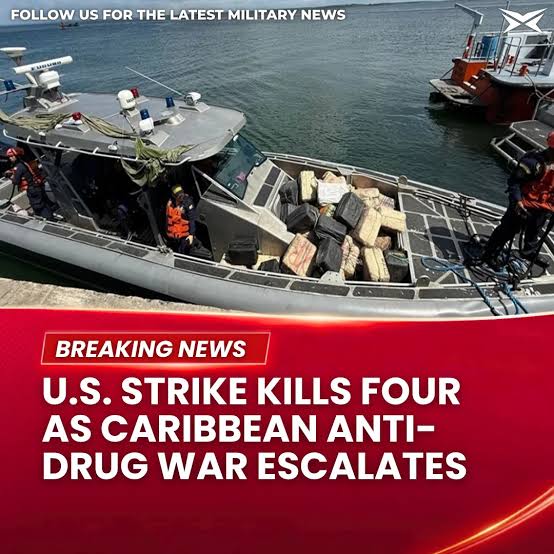
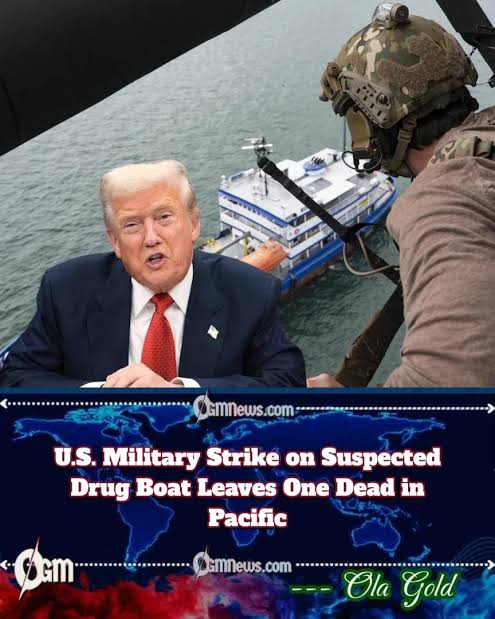
The U.S. military says it has killed five people in a strike against a vessel it alleges was involved in drug trafficking in the Eastern Pacific Ocean. The October 27 operation is the latest in an expanding campaign against suspected drug-smuggling boats launched by the Trump administration in September 2025.
However, the military has not publicly released evidence demonstrating that the targeted vessel was carrying illegal drugs, raising renewed questions about accountability, due process and the legal justification for the attacks.
According to U.S. Southern Command, the vessel was traveling along established drug-trafficking routes and intelligence indicated that it was actively involved in narcotics smuggling. The command described the five people killed as “narco-terrorists.”
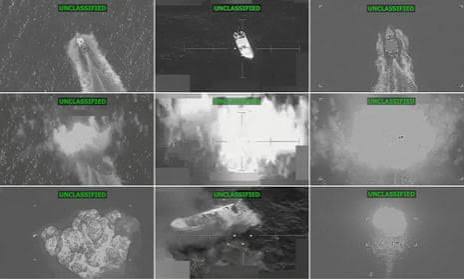
A video released by the military showed a small boat on the water before an explosion destroyed it. The footage, by itself, does not establish whether drugs were aboard or independently confirm the identities and activities of those killed.
Washington Defends Its Campaign Against Drug Traffickers
President Donald Trump’s administration has defended the strikes as part of an aggressive effort to disrupt criminal organizations accused of transporting narcotics toward the United States.
Trump has argued that the country is engaged in an armed conflict with drug cartels and that stronger military action is necessary to combat drug trafficking and the deadly consequences of substance abuse.
U.S. officials have repeatedly said intelligence identified the targeted vessels as participating in illegal operations. However, the government has released limited public evidence supporting many of its claims about the boats and their occupants.
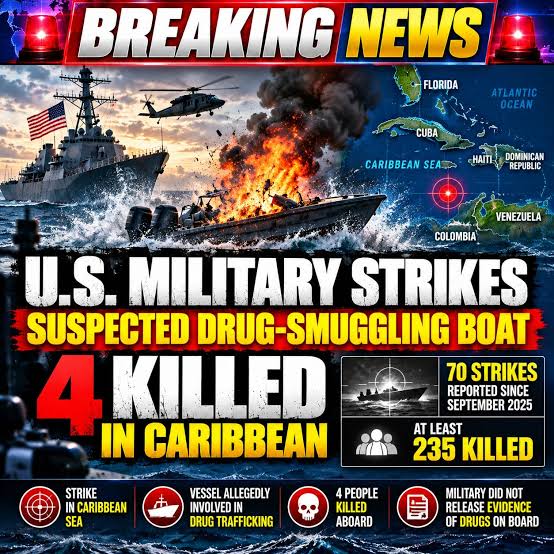
The latest strike brings the reported death toll from the campaign to at least 240 people across more than 70 operations, according to reporting by The Associated Press on October 28, 2026.
The growing number of deaths has intensified scrutiny of the administration’s approach, particularly because the operations are being carried out against suspected traffickers rather than in a conventional battlefield involving clearly identified enemy combatants.
Critics Question Whether the Killings Are Legal
Human rights organizations, international legal experts and some U.S. lawmakers have questioned whether the strikes comply with domestic and international law.
Critics argue that suspected drug traffickers cannot automatically be treated as lawful military targets simply because the government believes they are involved in criminal activity. They say the circumstances of each operation, the legal authority for using lethal force and the possibility of arrest or other alternatives must be carefully examined.
Human Rights Watch, Amnesty International and independent United Nations experts have raised concerns about the legality of the broader campaign, describing the killings as unlawful extrajudicial executions.
The administration, meanwhile, maintains that its operations are directed against dangerous criminal networks and are justified by its national security objectives.
The central dispute is whether the United States can legally use military force to kill people suspected of drug trafficking when the government has not publicly demonstrated that they were engaged in conduct making them lawful military targets.
A lack of publicly released evidence does not, by itself, establish that no intelligence exists. Nevertheless, the absence of transparent supporting information makes independent scrutiny of the government’s claims more difficult.
Why the Evidence Matters
The controversy extends beyond the latest five deaths.
Public evidence can help establish whether a targeted vessel was carrying drugs, whether those aboard posed an imminent threat, and whether the force used was legally justified.
Without such information, journalists, lawmakers and independent investigators face significant obstacles in assessing the military’s account.
The Pentagon’s inspector general has said it plans to examine whether the military followed its established targeting procedures. However, the review is not intended to determine the overall legality of the strikes, leaving a significant question unresolved.
Previous operations have also attracted scrutiny over the treatment of survivors. In an earlier Caribbean strike, two men who initially survived an attack were killed in a subsequent strike on the damaged vessel. That incident prompted questions from lawmakers and legal experts about whether the use of force complied with the laws governing armed conflict.
Although the circumstances of each operation differ, the earlier incident has added to calls for greater transparency and independent oversight.
Are the Strikes Actually Stopping Drugs?
Another question concerns whether the campaign is achieving its stated objective.
The administration says the attacks are intended to disrupt drug-trafficking networks and prevent narcotics from reaching American communities. Critics question whether destroying boats and killing suspected smugglers is an effective strategy for reducing the overall supply of illegal drugs.
Much of the fentanyl entering the United States is trafficked overland from Mexico, according to U.S. government reporting. This has prompted questions about how directly maritime strikes address the principal routes used to transport that particular drug.
That does not mean maritime trafficking is unimportant. Rather, it raises questions about the evidence used to measure the campaign’s effectiveness and whether its costs and consequences are justified by its results.
A Growing Accountability Challenge for the Pentagon
The latest operation puts renewed pressure on the Pentagon and the Trump administration to explain the intelligence behind their targeting decisions.
Officials face a difficult balance between protecting sensitive intelligence and providing enough information for the public and elected representatives to assess whether lethal military action is justified.
For the families of those killed, the stakes are immediate. Their relatives have been described by U.S. officials as drug traffickers, but the public has not been given evidence establishing the allegation against the five people killed in this particular strike.
For the United States, the issue reaches beyond one vessel in the Pacific. It concerns the limits of presidential authority, the application of the laws of armed conflict and the level of transparency expected when the government uses lethal force outside a conventional war zone.
The military says it targeted a drug-smuggling vessel. Critics say that accusation alone cannot settle the question of legality.
Until more information is made public, the latest strike is likely to remain a flashpoint in the wider debate over America’s campaign against suspected drug traffickers and the accountability of those who authorize lethal operations.
Sources for publication
– Associated Press — U.S. military says five were killed in an alleged drug-boat strike
– Reuters — U.S. military says strike in Eastern Pacific killed five
– CBS News — U.S. military destroys alleged drug boat in Pacific Ocean

Taylor Swift & Travis Kelce’s Relationship Faces Fresh Scrutiny as Fans Debate Whether Fame Is Putting Too Much Pressure on Their Love Story-What do you think? Can a relationship survive when millions of people are constantly watching, or should fans give Taylor Swift and Travis Kelce more privacy? Share your thoughts in the comments.

LeBron James Still Dominates the Headlines, but One Question Won’t Go Away: When Should an NBA Legend Finally Retire?

The latest U.S. military strike in the Eastern Pacific has left five people dead, reigniting a fierce debate over Washington’s campaign against suspected drug traffickers and whether the government can justify lethal force without publicly presenting evidence.

Chiefs Sign Justin Tucker After Sexual Misconduct Allegations as Harrison Butker’s Struggles Raise Big Questions

Exclusive: Wedding guest’s breathtaking hand-painted portrait finally reveals Taylor Swift and Travis Kelce’s ultra-secret custom Christian Dior wedding looks in exquisite detail after the couple’s private July ceremony

Tom Cruise Sparks Second-Chance Romance Rumors With Ex Elsina Khayrova After Ana de Armas Split — Amid Pregnancy Speculation

Even Prince William Wants Taylor Swift’s Attention! Travis Kelce Reacts to the Prince’s Hilarious Selfie Confession

“WHY DESTROY THEM?” Taylor Swift’s Reported $30 Million Wedding Sparks Outrage After Custom Decorations Were Allegedly Destroyed!

Kris Jenner, 70, Sparks Pregnancy Frenzy After Showing Off Mysterious Baby Bump in Viral Photos

“John Cena’s Wife Pregnant After He Swore He’d Never Have Kids — Is This the Ultimate Plot Twist or a Massive Hoax?”

UAE Secretly Aiding Houthis Against Saudi-Backed Forces in Yemen, Sources Claim
